When Labcorp agreed to pay $2.3 million and overhaul its vendor management program following a 2019 breach affecting 10.2 million customers, the settlement highlighted essential vendor security controls. The breach originated with American Medical Collection Agency (AMCA), a debt collector Labcorp used, showing how your vendors' security failures can become your regulatory liability.
Most vendor contracts include generic security language that won't satisfy regulators or protect you when a vendor's breach exposes your data. You need specific, enforceable clauses that establish audit rights, incident response obligations, and data handling restrictions.
This template provides contract language modeled on the requirements Labcorp must now impose on all vendors handling customer data.
Purpose of This Template
This contract addendum sets cybersecurity requirements for any vendor that processes, stores, or transmits your organization's data. Use it when:
- Onboarding new vendors who'll handle customer data, payment information, or protected health information
- Renegotiating existing vendor agreements that lack specific security controls
- Addressing audit findings that identify gaps in vendor oversight
- Meeting regulatory requirements for third-party risk management under frameworks like HIPAA, GLBA, or state data protection laws
The template covers five critical areas: security baseline requirements, audit and assessment rights, incident notification obligations, data handling restrictions, and termination triggers.
Prerequisites
Before implementing this template, ensure you have:
Internal capabilities:
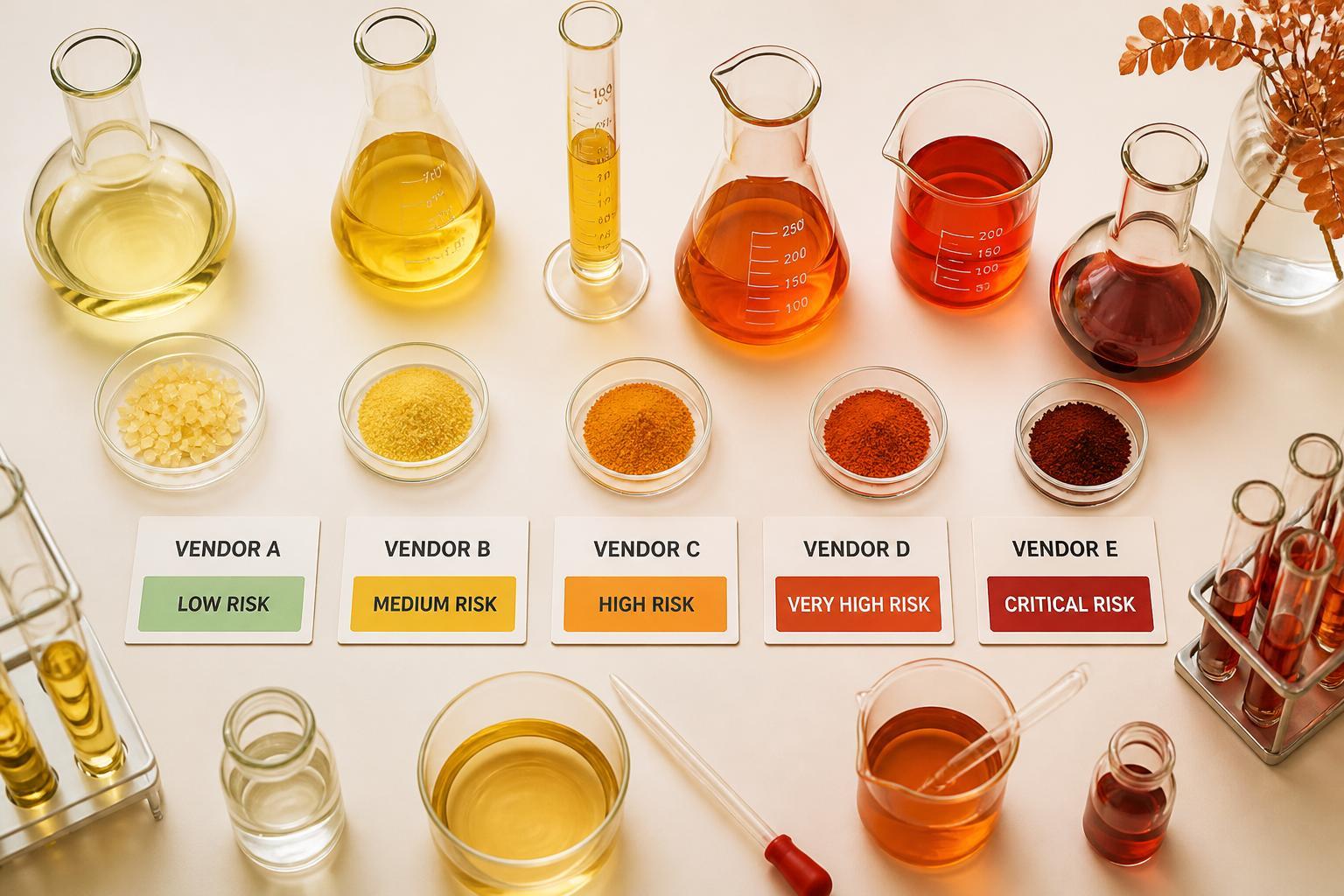
- A vendor risk classification system (tier vendors by data sensitivity and access level)
- Defined security standards your organization follows (ISO 27001, NIST CSF, or your own framework)
- An incident response plan that includes vendor-originated breach scenarios
- Legal review capacity to adapt clauses to your jurisdiction and industry
Vendor information:
- Current security certifications (SOC 2, ISO 27001, HITRUST)
- Existing security controls documentation
- Subcontractor relationships that might access your data
- Data retention and destruction practices
If you lack an internal security framework, reference NIST CSF Core Functions as your baseline. If you can't review vendor security documentation yourself, the audit rights in this template let you hire a third party to do it.
The Template
VENDOR CYBERSECURITY REQUIREMENTS ADDENDUM
Section 1: Security Baseline
Vendor shall implement and maintain security controls that meet or exceed [YOUR ORGANIZATION]'s Information Security Standards, attached as Exhibit A, including:
1.1 Access Controls: Multi-factor authentication for all accounts accessing [YOUR ORGANIZATION] data; role-based access restrictions; quarterly access reviews; immediate termination of access for departed personnel.
1.2 Data Protection: Encryption of data at rest using AES-256 or equivalent; encryption of data in transit using TLS 1.2 or higher; secure key management with annual key rotation.
1.3 Network Security: Network segmentation isolating [YOUR ORGANIZATION] data from other clients' data; intrusion detection and prevention systems; vulnerability scanning at least quarterly with critical findings remediated within 15 days.
1.4 Endpoint Security: Anti-malware on all systems processing [YOUR ORGANIZATION] data; patch management with critical security updates applied within 15 days of release; endpoint detection and response capabilities.
1.5 Personnel Security: Background checks for personnel with data access; annual security awareness training; confidentiality agreements signed by all personnel.
Section 2: Audit and Assessment Rights
2.1 Vendor shall provide [YOUR ORGANIZATION] with current SOC 2 Type II reports (or equivalent third-party security assessments) annually, within 30 days of report completion.
2.2 [YOUR ORGANIZATION] reserves the right to conduct on-site or remote security assessments of Vendor's systems and processes, with 15 days' advance notice, no more than once annually unless triggered by a security incident.
2.3 Vendor shall remediate findings classified as "High" or "Critical" within 30 days of assessment report delivery and provide written confirmation of remediation.
2.4 Vendor shall notify [YOUR ORGANIZATION] within 5 business days of any material change to security controls, certifications, or subcontractor relationships.
Section 3: Incident Notification
3.1 Vendor shall notify [YOUR ORGANIZATION] within 24 hours of discovering any security incident that affects or potentially affects [YOUR ORGANIZATION] data, including unauthorized access, data exfiltration, ransomware infection, denial-of-service attacks, or compromise of systems processing [YOUR ORGANIZATION] data.
3.2 Initial notification shall include: incident timeline, affected systems, data types potentially compromised, preliminary root cause assessment, and immediate containment actions taken.
3.3 Vendor shall provide updated incident reports every 48 hours until incident closure, and a final root cause analysis within 30 days of incident resolution.
3.4 Vendor shall preserve all logs and forensic evidence related to the incident for 90 days following incident closure or until notified by [YOUR ORGANIZATION] that preservation is no longer required.
Section 4: Data Handling Restrictions
4.1 Data Minimization: Vendor shall only collect, process, and retain the minimum data necessary to perform contracted services. Vendor shall not aggregate [YOUR ORGANIZATION] data with other clients' data.
4.2 Geographic Restrictions: [YOUR ORGANIZATION] data shall be stored and processed only in [SPECIFY JURISDICTIONS]. Vendor shall not transfer data outside these jurisdictions without prior written consent.
4.3 Retention and Destruction: Vendor shall retain [YOUR ORGANIZATION] data only for the duration of the contract plus [SPECIFY PERIOD] unless legally required otherwise. Upon contract termination or at [YOUR ORGANIZATION]'s request, Vendor shall securely delete all data within 30 days and provide written certification of destruction.
4.4 Subcontractor Requirements: Vendor shall not engage subcontractors to process [YOUR ORGANIZATION] data without prior written approval. All approved subcontractors must agree to security requirements equivalent to this Addendum.
Section 5: Termination Rights
5.1 [YOUR ORGANIZATION] may terminate this Agreement immediately if Vendor:
- Suffers a security incident affecting [YOUR ORGANIZATION] data and fails to notify within required timeframes
- Fails to remediate High or Critical security findings within required timeframes
- Loses required security certifications
- Materially breaches any provision of this Addendum
Customizing the Template
Exhibit A (Security Standards): Attach your organization's security framework or reference a public standard. If you follow NIST CSF, list the specific controls from each Core Function you require. If you're in healthcare, reference HIPAA Security Rule requirements. For financial services, cite GLBA Safeguards Rule provisions.
Audit frequency: Adjust Section 2.2 based on vendor risk tier. High-risk vendors (those processing sensitive data or with broad system access) warrant quarterly reviews. Low-risk vendors might need only annual assessments.
Notification timeframes: The 24-hour incident notification window in Section 3.1 reflects regulatory norms, but adjust based on your incident response capacity. If your IR team can't mobilize in 24 hours, a 48-hour window might be more realistic.
Geographic restrictions: Section 4.1 matters if you're subject to data localization requirements (GDPR, China's PIPL, Russia's data localization law). Specify allowed jurisdictions explicitly.
Data segregation: The prohibition on data aggregation in Section 4.1 prevents the AMCA scenario, where one vendor's breach exposed data from multiple clients. If your vendor needs to aggregate data (for benchmarking, for instance), require logical segregation with separate encryption keys.
Validation Steps
After executing this addendum:
Within 30 days:
- Collect current security certifications and assessment reports referenced in Section 2.1
- Verify vendor has documented your data's storage locations and confirmed they meet geographic restrictions
- Obtain vendor's incident notification contact list and test notification procedures with a tabletop exercise
Within 90 days:
- Conduct your first security assessment under Section 2.2, either internally or through a third-party auditor
- Review vendor's remediation plan for any findings and establish tracking for the 30-day remediation window
- Verify vendor has updated their contracts with subcontractors to flow down these requirements
Ongoing:
- Track certification renewals (SOC 2 reports typically expire after 12 months)
- Monitor for vendor security incidents through threat intelligence feeds and news monitoring
- Maintain a vendor risk register documenting assessment dates, findings, and remediation status
This template won't prevent every vendor breach, but it gives you contractual power to demand the security controls and transparency that regulators expect you to enforce. When a vendor fails, you'll have documentation showing you required the right controls and exercised oversight, which matters when attorneys general come asking why you didn't do more to police your vendors.